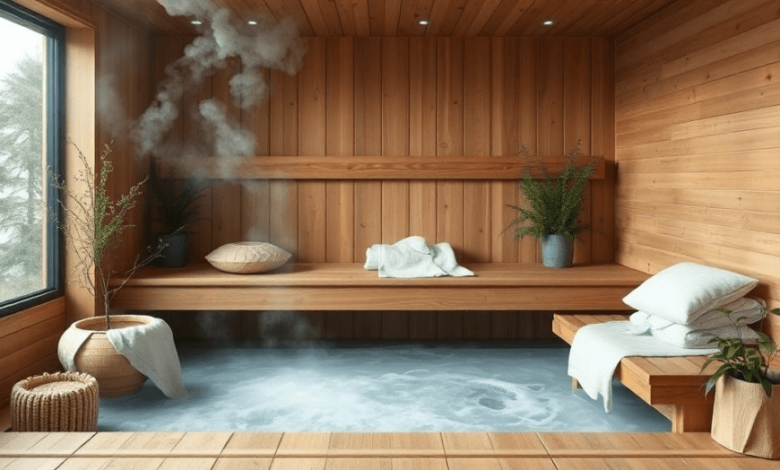
Outdoor Sauna End-to-End Guide: Specs, Install, Heater, and Cost is worth evaluating through the homeowner’s real week, not a perfect catalog photo. The best setup is the one that gets used, stays safe, and does not become a maintenance headache.
Last October my neighbor Craig dug out a 6×8 gravel pad behind his detached garage in suburban Minneapolis, hired an electrician for a 50-amp run, and assembled a pre-cut barrel sauna over a long weekend with his teenage son. Total all-in cost: about $4,800. He uses it four or five mornings a week before work, even in January, standing on the frozen grass in a bathrobe at 6 a.m. waiting for it to hit 175°F. When I asked him whether it was worth it, he said, “I stopped going to the Y.” That exchange is roughly how most outdoor sauna purchases start: someone sees a neighbor’s build and starts asking questions.
Here is the practical read of everything below. An outdoor sauna is a real home upgrade, but only when the foundation, heater sizing, and electrical work are done right. Most projects land between $2,490 and $16,980 depending on size, wood species, and whether you’re adding a cold plunge. The difference between a great install and a frustrating one almost always comes down to the pad and the wiring, not the unit itself.


What Actually Matters on the Spec Sheet
Spec sheets trip people up because they bury the important numbers in a wall of marketing copy. Here’s what to actually look at.
Heater-to-volume match. This is the single biggest technical decision. An undersized heater runs constantly and burns out components early. An oversized heater cycles too aggressively and wastes energy. Read the manufacturer’s sizing chart. Don’t eyeball it from a Reddit thread.
Wood and joinery. Pre-cut tongue-and-groove cladding in cedar, hemlock, thermo-aspen, or redwood is standard for a reason: it locks tight, insulates well, and ages gracefully. Budget builds sometimes use butt joints sealed with felt strips. Those leak heat within a season and look rough within two. The price difference is usually a few hundred dollars. Spend it.
For cold-plunge setups (if you’re building a contrast station), check chiller horsepower, filtration micron rating, ozone/UV sanitation, and tub material. A 1/3 HP chiller can hold 50°F in a small insulated tub in a temperate climate. Put that same chiller in an uninsulated stock tank in an August garage in Houston and it’ll run itself to death.
Barrel vs. cabin is mostly a space and aesthetic call. Barrels heat a bit faster (less interior volume), fit on smaller pads, and cost less. Cabins give you more headroom, bench flexibility, and room for a second row.
The Research, Without the Hype
The study that launched a thousand sauna Instagram reels is Laukkanen et al. (2015), published in JAMA Internal Medicine. The team followed 2,315 middle-aged Finnish men over 20 years and found a dose-response relationship between sauna frequency and cardiovascular mortality. Men who used a sauna 4 to 7 times per week had roughly half the cardiovascular mortality of those who went once a week. That’s a striking finding, though it comes with the obvious caveat that Finnish men who sauna daily may differ from the general population in other lifestyle factors.
A 2018 follow-up in BMC Medicine from the same research group reported lower dementia incidence at the highest sauna frequencies. The proposed mechanism involves heat acclimation, improved endothelial function, and a cardiac response that mimics moderate-intensity exercise.
For a home user, 20-minute sessions at 170°F to 195°F, two to four times per week, is a reasonable starting point. Hydrate before and after. Step out if you feel lightheaded. That’s it. No need to turn it into a protocol with a Greek name.
Anyone with a cardiac history, uncontrolled blood pressure, or who is pregnant should talk to their physician before starting. The research is encouraging for healthy adults. It is not a blanket prescription.
Install: The Pad and the Wiring Are the Whole Game
Here’s where I think most first-time buyers underestimate the project. The sauna kit is the fun part. The pad and electrical are the boring parts. And the boring parts determine whether you’re happy a year from now.
Pad. A 4-inch compacted gravel base with a drainage layer works fine for barrel units on flat, stable ground. Cabin saunas in cold or wet climates belong on a 4-inch reinforced concrete slab, which runs roughly $4 to $7 per square foot installed. The catch is that a pad that settles or cracks after you’ve placed a 900-pound unit on top of it is dramatically more expensive to fix than to do right the first time.
Electrical. A typical traditional sauna heater pulls 4.5 to 9 kW on a dedicated 240V circuit at 30 to 50 amps. This is not weekend-warrior territory. A licensed electrician should run the circuit, pull the permit, and tie into your main panel. Cutting corners on high-amperage circuits in outdoor structures is how fires start. That is not an exaggeration.
Ventilation. You need an intake vent beneath the heater and an adjustable exhaust on the opposite wall near the ceiling. Miss this and the air in the cabin goes stale and stratifies badly (hot ceiling, cool floor, unpleasant session).
Permitting. Some counties exempt detached structures under 200 square feet from building permits, but the electrical permit for a 240V circuit is almost always required regardless. Call your local building department before you order the kit.
What It Actually Costs, All-In
The sticker price on the sauna is maybe 60% of the real number. Here’s the full picture.
Sauna units: $2,490 for an entry-level barrel kit. $6,000 to $10,000 for a mid-tier cabin with a quality heater. $12,000 to $16,980 for a panoramic glass-front or premium thermo-aspen build.
Pad: $400 to $900 for gravel. $1,200 to $2,400 for concrete.
Electrical run: $600 to $1,800 for a 240V dedicated circuit, depending on panel distance and local labor rates.
Cold plunge (if adding): $4,500 to $7,500 for a residential insulated tub with integrated chiller. $9,000 to $14,000 for a commercial-grade stainless build with full filtration. Stock-tank DIY setups run $400 to $900 but require manual ice, which gets old fast.
On resale, appraisers don’t add dollar-for-dollar value for a sauna, but a clean outdoor wellness setup is treated as a selling feature in Northeast and Pacific Northwest markets. Think of it like a well-done patio: it won’t appraise high, but it sells the house.
On the tax side, a residential sauna is rarely HSA or FSA eligible unless a clinician issues a Letter of Medical Necessity for a documented condition. This is patient-specific. Talk to your tax advisor before you assume a purchase qualifies.
Outdoor Sauna vs. the Alternatives
An infrared cabin plugs into a standard 120V outlet and operates at 120°F to 150°F. Convenient, yes. But it produces a different physiological response than a traditional Finnish sauna, and the Laukkanen data was collected on traditional saunas at traditional temperatures. If you want the experience the research actually studied, you want a traditional heater.
An indoor traditional build heats faster but eats living space and requires venting to the exterior. For most homeowners with even a small yard, outdoor makes more sense.
On the cold-plunge side, a purpose-built insulated tub with a 1 HP chiller holds 39°F to 45°F all day. A chest-freezer conversion is cheap but lacks filtration and sits in a mechanical gray area that will void every warranty involved. A stock tank with bags of ice works, but you’re basically running a very cold, very inconvenient lemonade stand for yourself.
The right answer is the build that matches your climate, your space, your electrical panel capacity, and (most importantly) the routine you’ll actually keep. A $14,000 setup you use twice and abandon is worth less than Craig’s $4,800 barrel he’s in every morning.
Where to Compare Models and Pricing
Once you’ve settled on the basics, the next step is comparing actual lineups. The fuller outdoor sauna resource I keep coming back to is this sauna company, which walks through specs, pricing tiers, and installation details for home builds. Worth bookmarking before you commit to anything.
FAQs
How quickly does an outdoor sauna heat up?
A 6 kW barrel sauna reaches 170°F in 25 to 35 minutes. A 7.5 kW cabin sauna hits the same temperature in 30 to 45 minutes. A cold-plunge chiller pulls a freshly filled tub from tap temperature to 45°F in 3 to 8 hours depending on chiller size and starting water temp.
How long should a typical outdoor sauna session last?
Most adults settle between 12 and 20 minutes at 170°F to 195°F, and between 2 and 5 minutes for a cold plunge at 40°F to 55°F. Build up gradually if you’re new to either.
Can I install an outdoor sauna on a deck?
Some smaller barrel units can sit on reinforced decks if the framing supports the loaded weight (often 600 to 1,200 lb). Most cabin units belong on a ground-level pad. Confirm load capacity with a structural engineer or contractor before placing a unit on existing decking.
How often does an outdoor sauna need maintenance?
Wipe down benches after each session and oil the exterior cedar or hemlock once a year. For cold plunges, replace filter cartridges every 6 to 12 weeks, run ozone or UV sanitation on schedule, and drain and refill at the manufacturer’s recommended interval.
Will my electric bill spike from an outdoor sauna?
A 6 kW sauna heater running for one hour costs roughly $0.60 to $1.20 at typical US residential rates. Three 20-minute sessions per week add about $4 to $8 per month. A 1/2 HP cold-plunge chiller in steady state pulls about 350 to 450 watts and adds $8 to $15 monthly in most climates.
Do I need a permit for an outdoor sauna?
It depends on your jurisdiction. Many counties exempt detached structures under 200 square feet from a building permit, but the electrical permit for 240V work is almost universally required. Always call your local building department first.
Is an outdoor sauna worth it compared to a gym sauna membership?
If you’ll use it three or more times per week, the math works out within one to two years versus a gym membership you’re paying for partly to access the sauna. The convenience factor (no drive, no locker room, your own schedule) is what makes people actually stick with it.
Disclaimer. This article is general consumer information, not medical advice. Heat and cold therapies carry real cardiovascular load. Anyone with arrhythmias, uncontrolled hypertension, Raynaud’s phenomenon, recent cardiac events, or who is pregnant should consult a physician before starting any new sauna or cold-plunge routine.
Any 240V electrical work should be completed by a licensed electrician under the appropriate local permit.
HSA and FSA reimbursement on wellness equipment is patient-specific and depends on a Letter of Medical Necessity from a clinician. Talk to your tax advisor before assuming a purchase qualifies.